Map fields, blocks, and traps
Organize fields by block, acreage, crop, lot, variety, and trap location so scouting data stays tied to where it happened.

AgFieldScout aids IPM by turning field scouting into organized, location-based, threshold-ready records that help growers make timely, evidence-based pest management decisions.
AgFieldScout connects mapped ranches, blocks, lots, varieties, traps, pest pressure, weather context, photos, and reports so each field record remains useful after the visit is over.
Organize fields by block, acreage, crop, lot, variety, and trap location so scouting data stays tied to where it happened.
Keep scouting moving with local drafts, cached pages, cached reports, and sync tools that finish the job when service returns.
Support entry and review with voice dictation, AI trap summaries, and Active Ingredient Review & IPM Recommendation Support.
Create HTML and PDF reports that make trap counts, pest summaries, photos, observations, and recommendations easy to review.
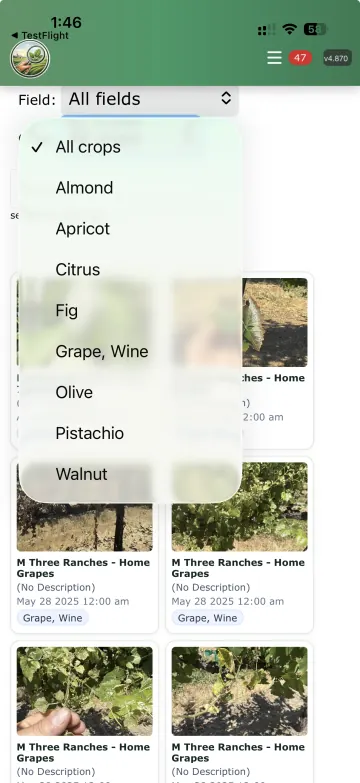
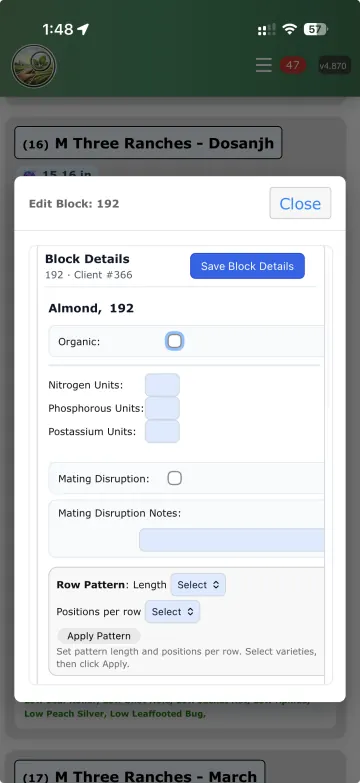
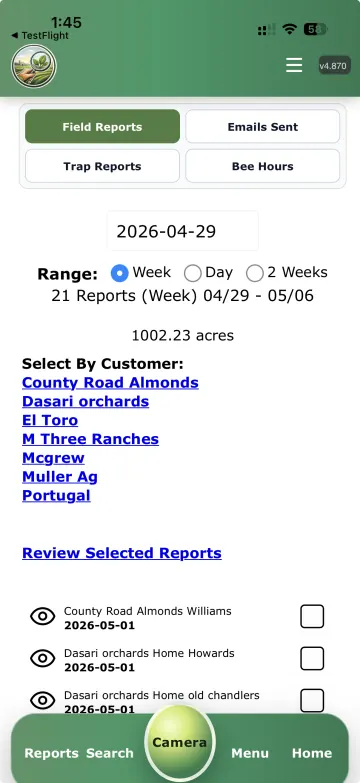
Real app screens from the workflow: open the field, review reports, edit block details, check trap charts, attach photos, and keep the report evidence in one place.
 App launch
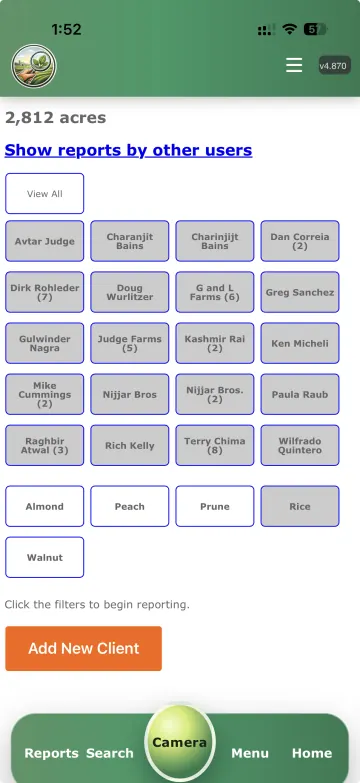 Quicksearch
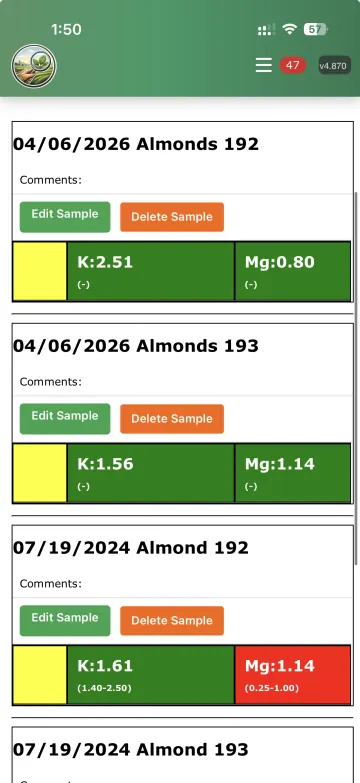 Field reports
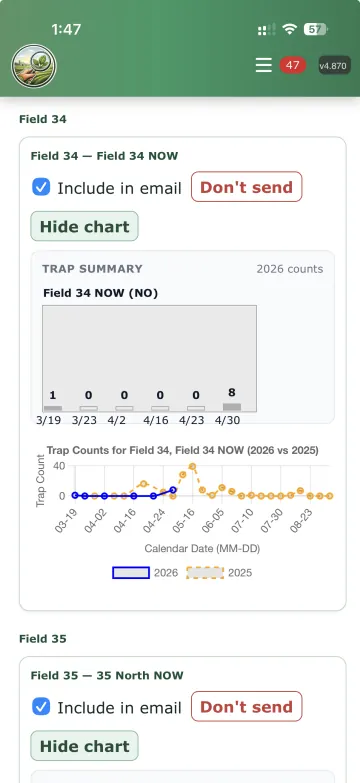 Report view
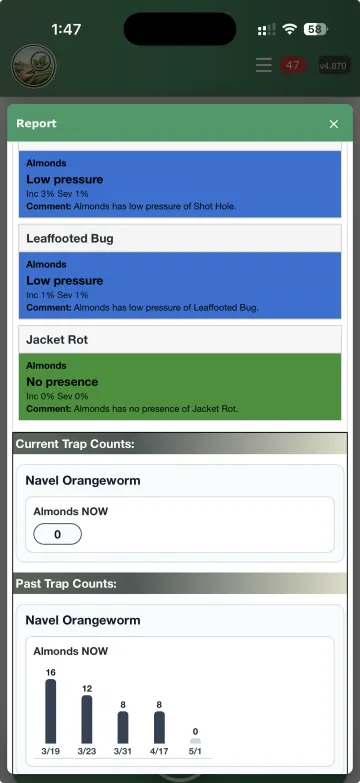 Trap charts
 Block editor
 Field images
 Samples
AgFieldScout keeps scouting evidence, trap activity, photos, GPS context, weather, crop stage, and report history together so pest management decisions are easier to document, compare, and explain.
Record pest pressure, trap counts, incidence, severity, photos, GPS context, and field observations during scouting visits so growers and crop advisors can see which pests are present and how serious the issue is.
Keep trap counts, pest ratings, prior reports, and block history together to compare current levels with past activity and treatment thresholds, so action is based on economic damage risk instead of pest presence alone.
Field, block, lot, variety, trap, and GPS-linked records show where pest pressure is concentrated and can support targeted treatment when only certain areas need attention.
Store scouting history, photos, pest summaries, trap activity, and previous recommendations to track whether an issue is increasing, decreasing, or recurring across visits or seasons.
Fast field entry and reviewable reports help advisors decide whether control is warranted, what method to use, and when timing will be most effective. MSU Extension notes that scouting information supports those control and timing decisions.
Weather context, growth stage history, and block-level information help interpret pest risk more accurately because outbreaks and disease pressure often depend on field conditions, crop stage, and recent weather.
Voice entry, camera capture, trap summaries, AI-assisted tools, and report-ready records help scouts move from field notes to professional reports without re-entering the same information.
Generate HTML and PDF reports with observations, pest pressure, trap counts, photos, and recommendations so scouts, PCAs, growers, and teams can understand the evidence behind each management decision.
Offline drafts, cached field data, and syncing tools allow scouting to continue when service is poor, which helps preserve timely field observations for IPM decisions.
Document why a treatment decision was made, what alternatives were considered, and whether higher-risk active ingredients were avoided or still required.
AgFieldScout helps PCAs document pest pressure, compare treatment options, surface active-ingredient concern flags, and record when lower-risk alternatives are used or unavailable.
Build each client around the way the ranch is actually managed, then keep scouting data tied to that structure.
Capture work in the field, preserve unsent entries, and use AI where it helps technical review move faster.
Turn field data into polished reports, then bring the same record back into the next pass and seasonal plan.
AgFieldScout works best when one field record supports the scouting pass, recommendation, report, and next visit.
Review past reports, prior pests, trap activity, weather, and recurring block pressure before the visit.
Finalize ratings, document the recommendation, and share an HTML or PDF report without rebuilding context by hand.
Capture the scouting pass, work offline when needed, use AI-assisted review tools, and generate reports with pest, trap, photo, and observation history organized season after season.
We can review your scouting workflow, reporting needs, block structure, trap setup, and data capture process so your team starts with a cleaner setup.
